


Writing a press release seems straightforward until you actually try to write one. What starts as a simple announcement quickly turns into overthinking every sentence, questioning what matters, and wondering if anyone will actually read it.
Most press releases get ignored for a simple reason: they are unclear, overly promotional, or not actually newsworthy. The ones that get picked up are different. They are focused, direct, and easy to understand.
If you want to know how to write a press release that stands out, it is less about sounding impressive and more about communicating something real, clearly, and quickly.
What Is a Press Release?
A press release is a formal way to share news about your business with the media, your audience, and anyone else paying attention. It is designed to communicate something timely and relevant, whether that is a product launch, a partnership, a milestone, or a meaningful update.
It is not just another piece of content. A press release is meant to be picked up, shared, and referenced. That means it needs to do more than exist. It needs to make sense to someone who is not already inside your business.
The Purpose of a Press Release (Spoiler: It’s Not An Excuse to Talk About Yourself!)
A press release is not about sounding official or checking a box. It’s also not necessary to promote your business. Its purpose is to clearly communicate something worth paying attention to.
When someone reads your press release, they should immediately understand what is happening and why it matters. This means writing a solid, direct headline, using information hierarchy, and including links and quotes wherever possible. If the reader can’t digest a summary within the first few seconds, the rest of the content doesn’t stand a chance.
This is where many companies go wrong. They treat press releases like marketing copy instead of communication tools. They try to impress instead of inform. The outcome seems vague, overly refined, promotional, and easy to overlook.

A strong press release focuses on clarity, relevance, and usefulness. It respects the reader’s time. It makes the story easy to understand and even easier to share.
When done well, a press release can support visibility across channels, reinforce your brand’s credibility, and complement broader efforts. If you want to see what this looks like in practice, here is a real example:
How to Write a Press Release Without Scrambling the Message
Writing a strong press release is less about creativity and more about structure. When you follow a clear process, the message stays focused, and the writing becomes much easier. Not to mention that, oftentimes, the news outlets and wire services you’re sending your press release to are used to seeing press releases written a certain way.
Since 1906, the media has worked to establish the formulaic nature of a press release. They inspire a sense of familiarity and tradition for journalists looking to have all the necessary details for a story at their fingertips. Here’s how to “speak the press release language”:
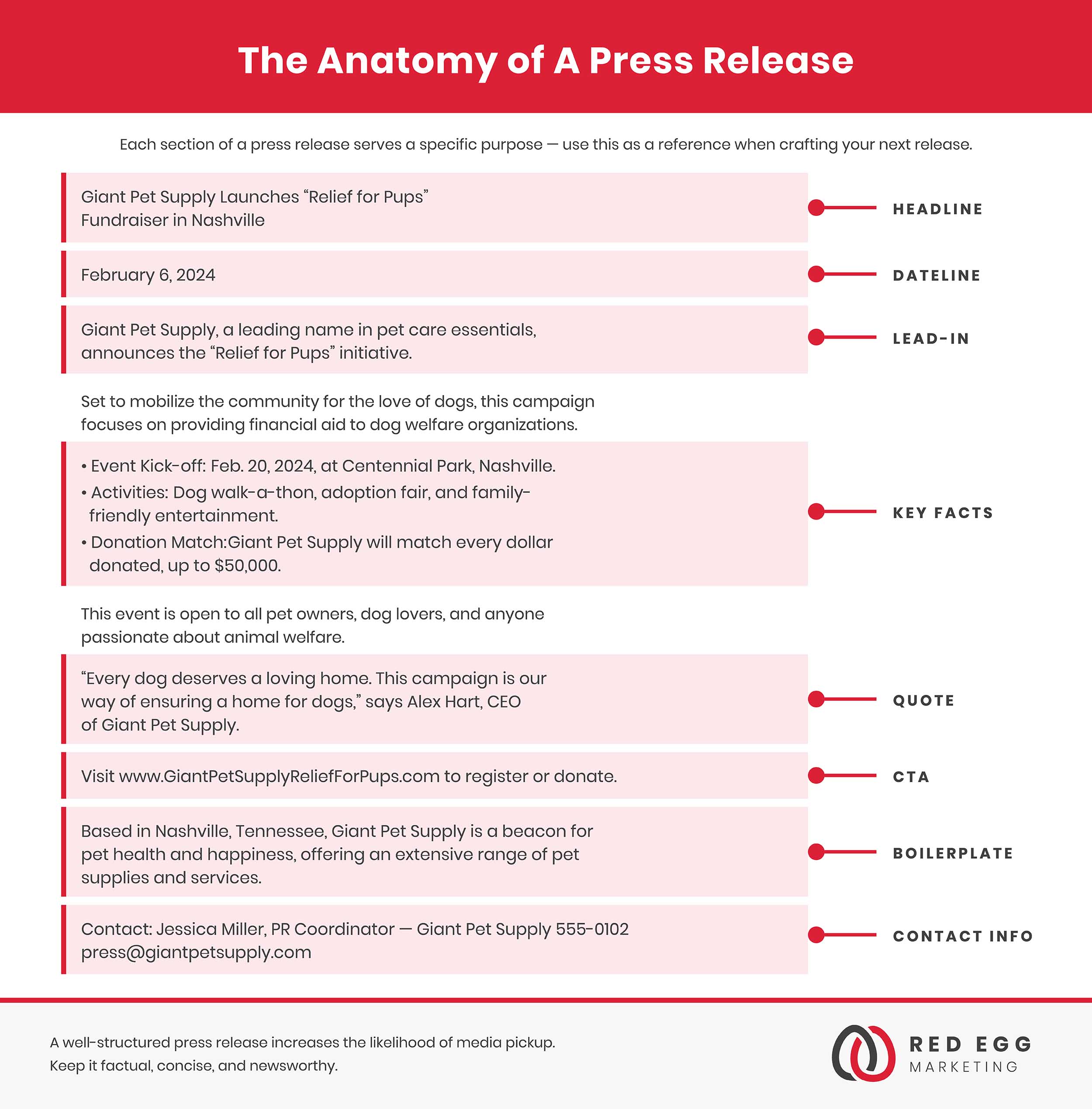
1) Start With the News
When you’re wondering how to write a press release, here’s where to start. Before you write a single sentence, you need to know what the actual news is. Not what your company is doing in general, but what is new, specific, and worth sharing. What about this is newsworthy?
If you cannot clearly explain what has changed or why it matters, the press release will feel unfocused from the start. A strong press release begins with a clear, simple answer to the question: what is happening?
Tip: Think about the articles you read online. What makes them interesting? What makes you want to click on them and read more? This is the angle you need to capture in your press release.
2) Write a Headline That Says Something Real
The headline is not the place to be clever. It is the place to be clear. A good headline tells the reader exactly what the announcement is. It removes ambiguity and immediately sets expectations. If someone reads your headline and still has questions about what the press release is about, it is not doing its job. Clarity beats creativity every time here.
3) Lead With the 5 Ws
The first paragraph should do the heavy lifting. It should answer:
- Who is involved
- What is happening
- When it is happening
- Where it is happening
- Why it matters
This is your “TL;DR” section for those busy writers who read 100+ press releases a day. There is no need to build suspense or hold back information. A press release is not a story that unfolds slowly. It is a direct communication that respects the reader’s time. Everything that follows simply adds depth.
4) Add Details That Matter
Once the core message is clear, you can expand on it with supporting details. This is where you explain what the announcement means in practice. You might describe how a product works, what makes a partnership significant, or how a new initiative will impact customers. The key is to stay focused on what is useful, not what is filler.
Every additional paragraph should add clarity, not repetition.
5) Include a Quote That Sounds Human
Quotes are often where press releases lose credibility. Generic statements that sound overly polished or scripted do not add value. They make the content feel less authentic when, really, these quotes are meant to add life and personality to the story.
Knowing how to write a press release quote can help your story stand out. A strong quote should sound like something a real person would say; It should provide perspective, context, or insight into why the announcement matters. If the quote could be used in any press release without changing a word, it probably needs to be rewritten.
Tip: You’re watching the nightly news and see an interview with someone at the scene. It adds life and depth to the story, doesn’t it? That’s what you’re producing here. The quote you include in your press release serves as a substitute for an in-person interview.
6) Drop Proof and Context (Why Anyone Should Care)
Context is what turns information into something meaningful. Without it, even a strong announcement can feel flat. This is where you explain why the news matters beyond your company and this announcement. You might reference industry trends, customer needs, or data that supports the relevance of your announcement.
This is also where a thoughtful approach to structure and clarity is important. Supported by some of our favorite SEO tools for content writing, you can help ensure your content is both readable and discoverable.
7) Add Boilerplate and Media Contact
At the end of your press release, include a short boilerplate that explains who your company is and what you do. This should be concise, consistent, and easy to understand. You should also include clear contact information so journalists or readers can follow up if they want more information. The easier you make it to connect, the more likely someone is to take the next step.
8) Format It Cleanly
Formatting matters more than most people realize. Knowing how to write a press release that is easy to scan is a skill, but it’s important to perfect it to ensure the reader gets beyond the first sentence. Short paragraphs, clear spacing, and simple structure make a big difference. The goal is to make the content easy to move through, not overwhelming. If you can whittle down your information and simplify the story to 1 page, do it.
If it feels dense or cluttered, it probably is.
What to Avoid When Writing a Press Release (The Usual Egg-splanations)
There are a few common mistakes that consistently make press releases less effective. The biggest one? You guessed it. Being too promotional! A press release is not an advertisement. When it reads like one, it loses credibility immediately and (as someone who used to read a lot of press releases in the newsroom) could leave a bad taste in the mouth of the writers you’re trying to engage!
Another common issue is burying the actual news. If the reader has to work to figure out what is being announced, they will not stick around long enough to find it. Must-know information should live at the top of the release; nice-to-know information can live in the middle or at the bottom.
Vague language is another common problem. Phrases that sound impressive but don’t actually say anything meaningful create confusion rather than clarity. The same goes for overused buzzwords or industry-niche jargon that add noise without adding value.
At its core, a press release should be simple, clear, and focused. When it tries to do too much or say too little at once, it becomes easy to ignore.
Ready to Write a Press Release That Gets Picked Up? Red Egg Can Help
A strong press release is not about sounding important. It is about being clear, relevant, and easy to understand. At its core, you should be promoting something newsworthy – something that matters!
At Red Egg, we help businesses turn real updates into content that earns attention, supports visibility, and fits into a broader marketing strategy. From shaping the message to writing and refining the final piece, our team ensures your press release communicates what matters in a way that actually lands.
If you are ready to share something worth talking about but are not sure how to write a press release that gets noticed, get in touch with our team, and we will help you say it the right way.